Common conditions causing lameness
Lameness can usually be grouped into sole bruising, non-infections conditions of the claw horn, infections diseases and non-foot related lameness.
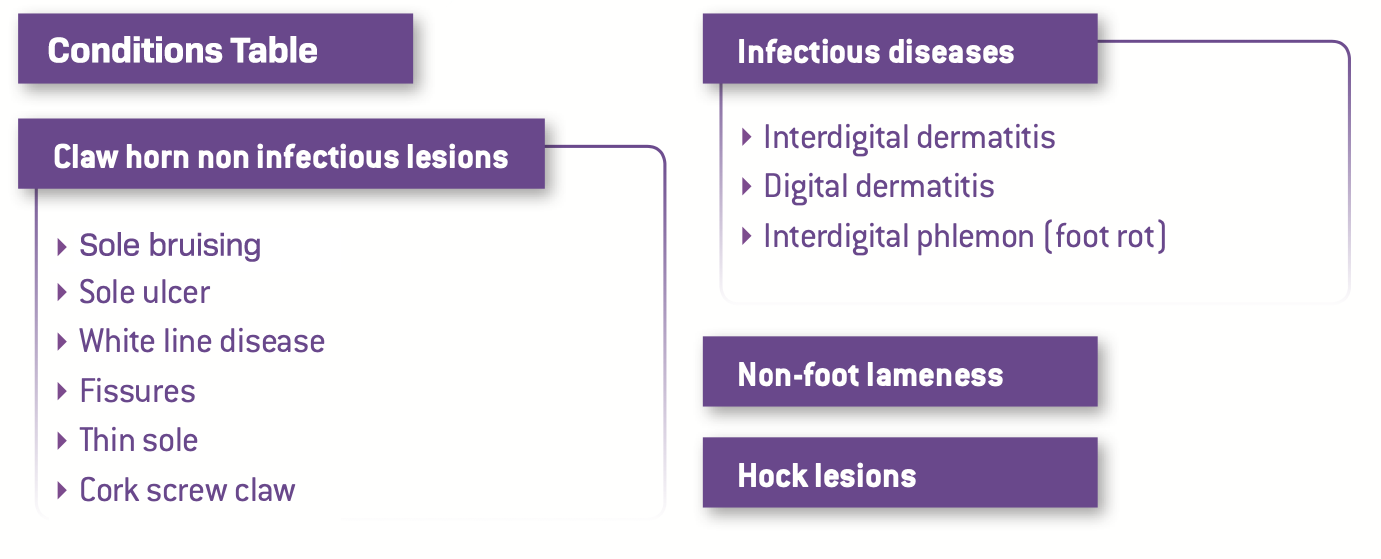
Claw horn non-infectious conditions
1. Sole Bruising
Sole bruising, if left untreated, is the precursor to sole ulceration. Visual clinical signs include haemorrhaging being incorporated into horn production and it is a painful condition. Sole bruising is associated with pressure being exerted on soft tissues in the foot and the subsequent inflammation. This lesion may appear to be mild in nature, but is painful and requires proactive treatment to reduce the risk of sole ulceration.
The cause of sole bruising is linked to a number of causal risk factors.

2. Sole Ulcer
This is caused by extreme pressure on specific areas of the foot, leading to inflammation and damage to the underlying sensitive tissues. This first produces bruising which can become ulcerated and lead to a bulging out of the soft tissues below. The excess pressure is produced by prolonged standing or by hoof / claw overgrowth and imbalance, sole bruising and severe heel erosion from hard or uneven surfaces.
3. White Line Disease
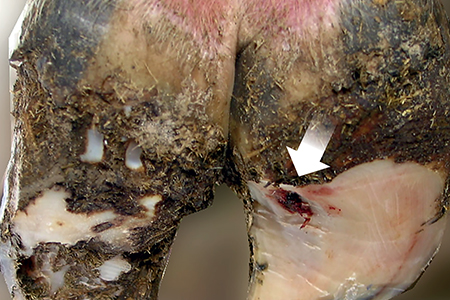
The white line runs between the hoof wall and the sole and is weaker than surrounding tissues, so it can easily be damaged by stones causing gravel to get into the foot. This damage can lead to the invasion of bacteria that cause secondary infections and abscesses.
The severity of these abscesses depends on the timing of treatment, the environment and the location of the abscess— the closer it is to the toe, the more painful they are and faster they develop. White line problems at the toe tips are more frequent in cows that walk a lot. In more rested cows, most white line lesions are located closer to the heel. White line disease is related to poor flooring / walk-ways, cow comfort and hygiene.
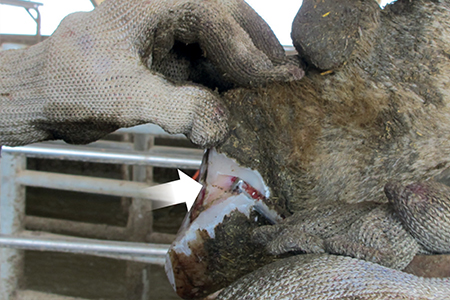
4. Fissures (cracks)
Vertical fissures are most frequent in beef cattle put out to pasture and may be related to mineral deficiencies and drying of the horn tissue. In dairy cows, infected cracks may appear if the cow also has digital dermatitis.
Horizontal fissures are often related to a general septic illness, such as mastitis.
5. Thin Sole
The sole should be at least 5 mm thick to ensure sufficient protection of the underlying sensitive tissues. Thin soles are caused by excessive wear combined with slow sole growth e.g. when the animals must walk along very long routes or on abrasive floors. In these conditions soft hooves, either because of a high moisture content or poor hoof quality, wear down more quickly.
A common mistake in the construction of new sheds is the installation of very rough cement floors, which are designed to prevent cows from slipping. However, the rough surface wears down the soles of the feet, resulting in thin soles. In intensive herds where cows walk a lot, the use of rubber mats in transit areas can reduce sole wear.
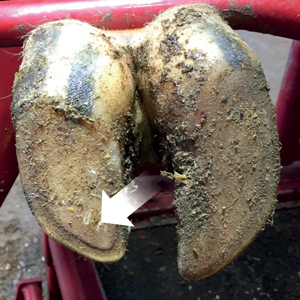
6. Cork-Screw Claw
This is a congenital hereditary problem. The hoof is twisted causing the hoof wall to curve inwards.
Treatment requires frequent trimming to slow down the deformation. These cows should not form part of the breeding herd.

Infectious conditions
1. Interdigital Dermatitis
This is an infection of the skin between the claws, which eventually leads to chronic foot conditions such as heel erosion and abnormal hoof growth, because of the abnormal weight distribution developed in response to the initial interdigital dermatitis lesion.
This condition does not always cause obvious lameness, but the animals tend to become restless during milking and frequently change their weight from one limb to another. Interdigital dermatitis affects the hindhooves much more than the forehooves. Interdigital dermatitis can be a problem in farms with poor hygiene and high stocking density.
In herds affected with chronic interdigital dermatitis, the animal’s hooves must be trimmed frequently in order to balance the weight between them and eliminate heel horn erosion (which can increase the frequency of sole ulcers).


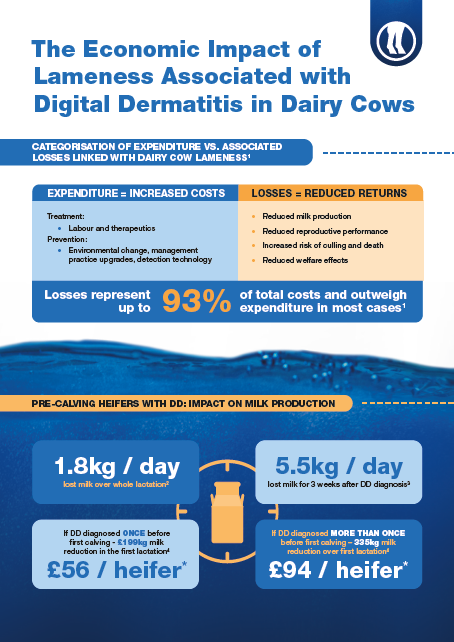
2. Digital Dermatitis
This is an ulcer with a strawberry-like appearance which occurs around the heel bulbs, although it can also appear between the claws.
It is caused by an infection with a mix of bacteria that attack skin already damaged by the chemical effects of slurry. Heel erosion can occur in long-standing cases.
Digital dermatitis is a progressive and cyclical condition - feet can become extremely swollen and painful. The severity is graded from M0 to M4 - the image shown on the right is graded as an M1 lesion.
It is common to find several wounds at different stages on the same hoof.
Foot trimming is important alongside foot bathing to eliminate the bacteria from the slurry.
3. Foot Rot
This is an infection occurring in the skin between the claws, following trauma, caused by the bacteria; Dichelobacter and Fusobacterium. The disease progresses quickly and causes a sudden drop in production and a decrease in food consumption. The treatment usually consists of antibiotic injections and pain relief. Early detection and treatment is key - if the disease if treated within the first few hours the results are usually very good, but much less so as time passes.

Non-Foot / Hock Lameness
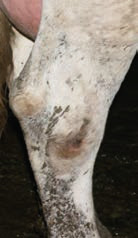
Lameness higher up the leg is usually caused by trauma and, following advice from a vet, non-steroidal anti-inflammatory drugs (NSAIDs) such as ketoprofen (Ketofen®) can be injected to treat any pain and inflammation. The most frequent causes of injury are slippery floors, narrow passages on farms, contact with sharp objects, and hurried handling of cattle.
Provision of inadequate beds and poor cubicle maintenance are the main causes of hock injury – including damage to the point of the hock. This may lead to infection and even arthritis in severe cases.